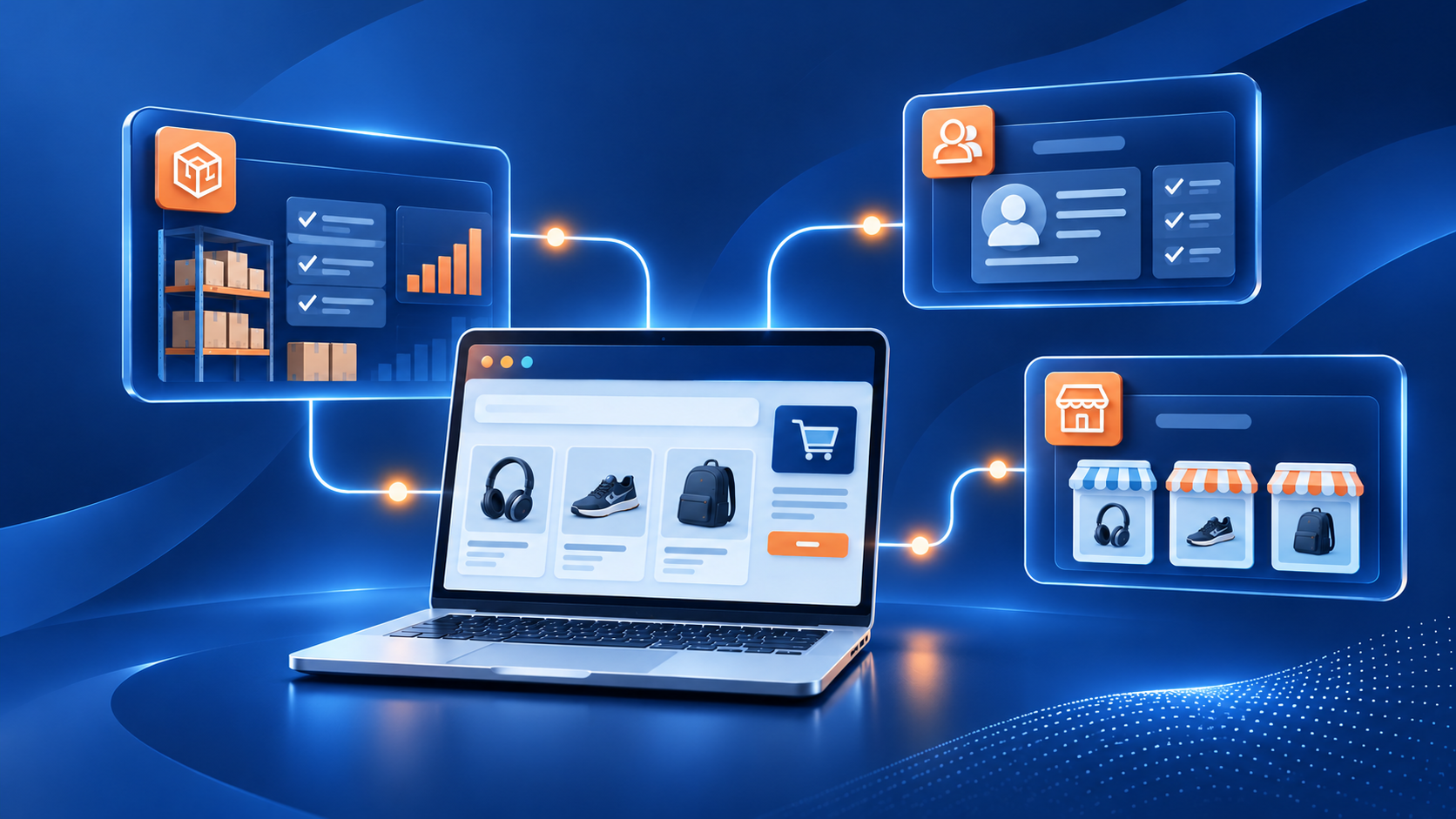
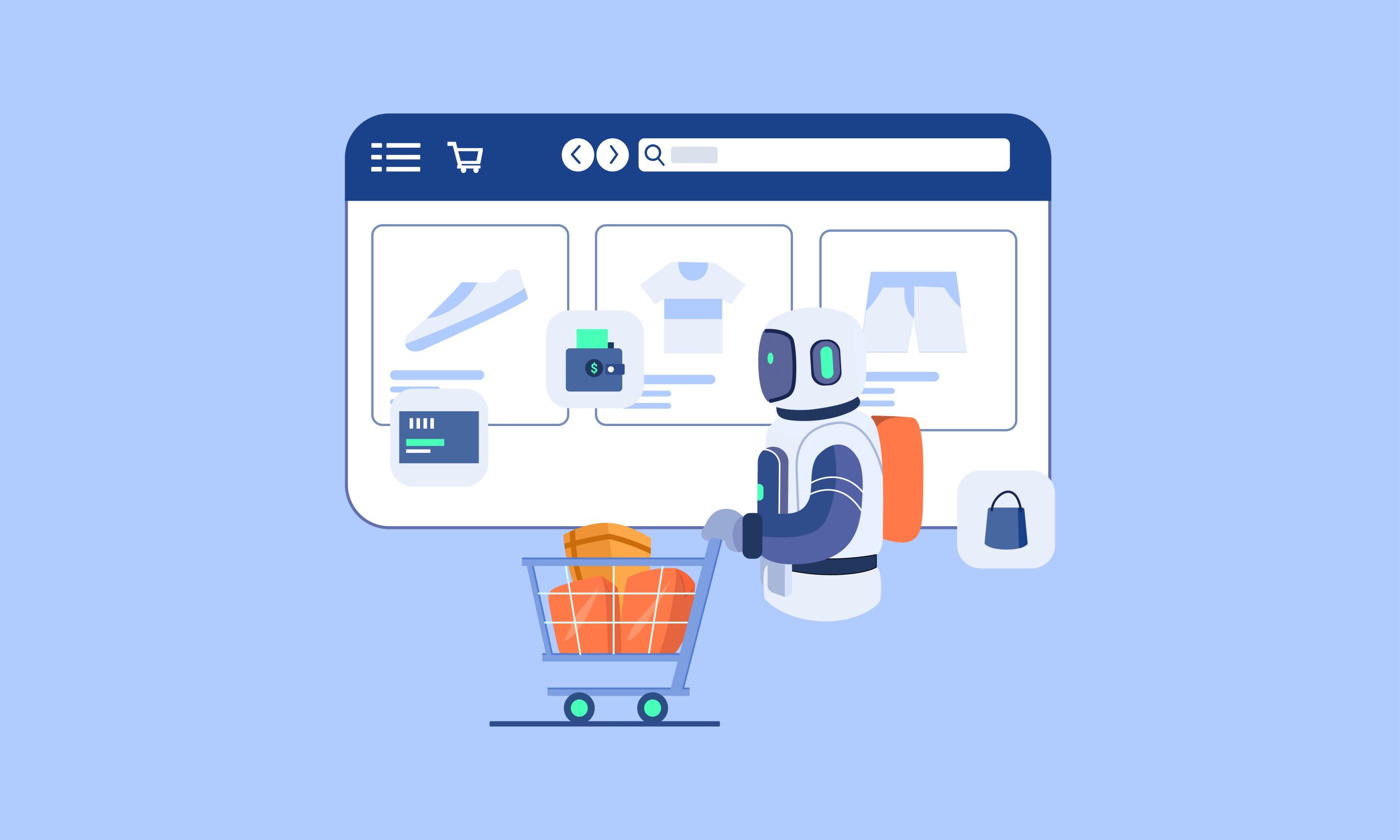
Managing an online store involves much more than simply displaying products and receiving orders. As a business grows, so does the amount of information that needs to flow between sales, stock management, invoicing, customer management and logistics. When these processes rely on disconnected tools, duplicated tasks, errors and difficulties in monitoring operations become increasingly common.
Ecommerce systems integration connects the online store with the ERP, CRM and marketplaces, creating a more consistent foundation of information. But where should a business start, and what factors should it consider before moving forward?
Why is ecommerce systems integration important?
A digital commerce operation may involve several platforms, each serving a different purpose. The online store displays the product catalogue and receives orders; the ERP supports stock management, invoicing and administrative processes; the CRM brings together sales and customer relationship information; and marketplaces provide additional sales channels.
Without proper integration, the same information may need to be entered into multiple systems. A price change, for example, might be updated in the ERP but remain outdated in the online store. An order received through a marketplace may require manual entry before it can be processed for dispatch. Integrating these systems helps reduce manual work and establish more reliable processes.
How does integration between an online store and an ERP work?
ERP ecommerce integration enables relevant data to flow between the sales platform and the business management system. Depending on the business’s requirements, products, prices, stock availability, customer information, orders and invoicing statuses can all be synchronised.
Consider a company that sells through both its website and its sales team. If both channels use consistent stock information, it becomes easier to avoid selling products that are no longer available. Similarly, when an online order is automatically transferred to the ERP, the team can focus on validating and preparing it rather than entering data manually.
It is important to define which system is responsible for each type of data, the direction in which information flows and how frequently it should be updated. Not every process requires real-time synchronisation; the decision depends on the operational impact of each type of information.
What role does CRM play in an integrated ecommerce operation?
A CRM system can bring together contact history, sales opportunities and valuable information for customer relationship management. When connected to an online store, it provides sales and customer support teams with greater context, while respecting data access and protection requirements.
In B2B ecommerce, for example, integration can help link online orders to business accounts, commercial terms and previous interactions. The information available should be relevant to each process and remain consistent across systems, preventing duplicate profiles or conflicting data.
What happens when a business also sells through marketplaces?
Marketplaces can expand a business’s commercial reach, but they also add complexity to catalogue, pricing, stock and order management. When each channel is managed separately, the risk of inconsistencies increases, particularly for businesses with extensive product catalogues or high order volumes.
A well-designed integration makes it possible to centralise essential information and management rules while accommodating the specific requirements of each marketplace. Businesses need to define how products are published, how stock availability is updated, how orders are received and how returns and delivery statuses are tracked.
The aim is to ensure that expanding into new sales channels does not result in a proportional increase in manual tasks.
What challenges should be considered before integrating systems?
Before selecting connectors or developing a bespoke integration, it is essential to understand the existing processes. Different systems may use different product references, pricing rules or customer identification structures. If these differences are not addressed, integration may simply automate existing inconsistencies.
Data quality, API limitations, security, error handling and monitoring must also be assessed. An interrupted synchronisation should be detected and recovered without compromising orders or creating duplicates.
For this reason, the integration architecture should be designed with the entire operation in mind, including ongoing maintenance and future development requirements.
How can businesses prepare their ecommerce integration for growth?
The first step is to map the existing systems and identify the most important information flows. Data ownership, integration priorities and validation criteria should then be established. Testing real-world scenarios, such as stock changes, cancellations, returns or communication failures, helps anticipate potential issues before going live.
As a business grows, new sales channels, warehouses, markets or commercial models may emerge. A modular architecture, supported by clear rules and continuous monitoring, makes it easier to adapt to these changes and reduces reliance on improvised solutions.
An integrated ecommerce operation starts with the right decisions
Integrating an online store, ERP, CRM and marketplaces requires a comprehensive view of both commercial and technological processes. Choosing the right platform is important, but success also depends on data quality, integration architecture and the ability to keep systems working together effectively.
At Toogas, we approach digital commerce operations as an integrated system, bringing together ecommerce platforms, integrations and technological development according to each business’s needs. If your company is looking to connect sales channels and processes or prepare its operations for growth, get in touch with us to explore the next steps.