
Certified official partners of the most renowned ecommerce solutions.

Toogas-AIP Webinar «Automation and Operational Efficiency in Ecommerce»

- Services
- Implementation of B2B and B2C Ecommerce Solutions
- ERP / CRM / OMS Integration and Automation
- Platform Migration and Upgrade
- Ecommerce Evolution and Support
- Digital Marketing – KPI-Driven
- Analytics, Insights and Data Reporting
- Artificial Intelligence (Agentic AI Ops)
- Ecommerce Audit and Consulting
- User Experience (UX) and Interface (UI)
- PPR Support
- Technologies
- Portfolio
- Clients
- About
- Contacts

AI Search in ecommerce: how many sales are we losing because the customer did not search using the right words?
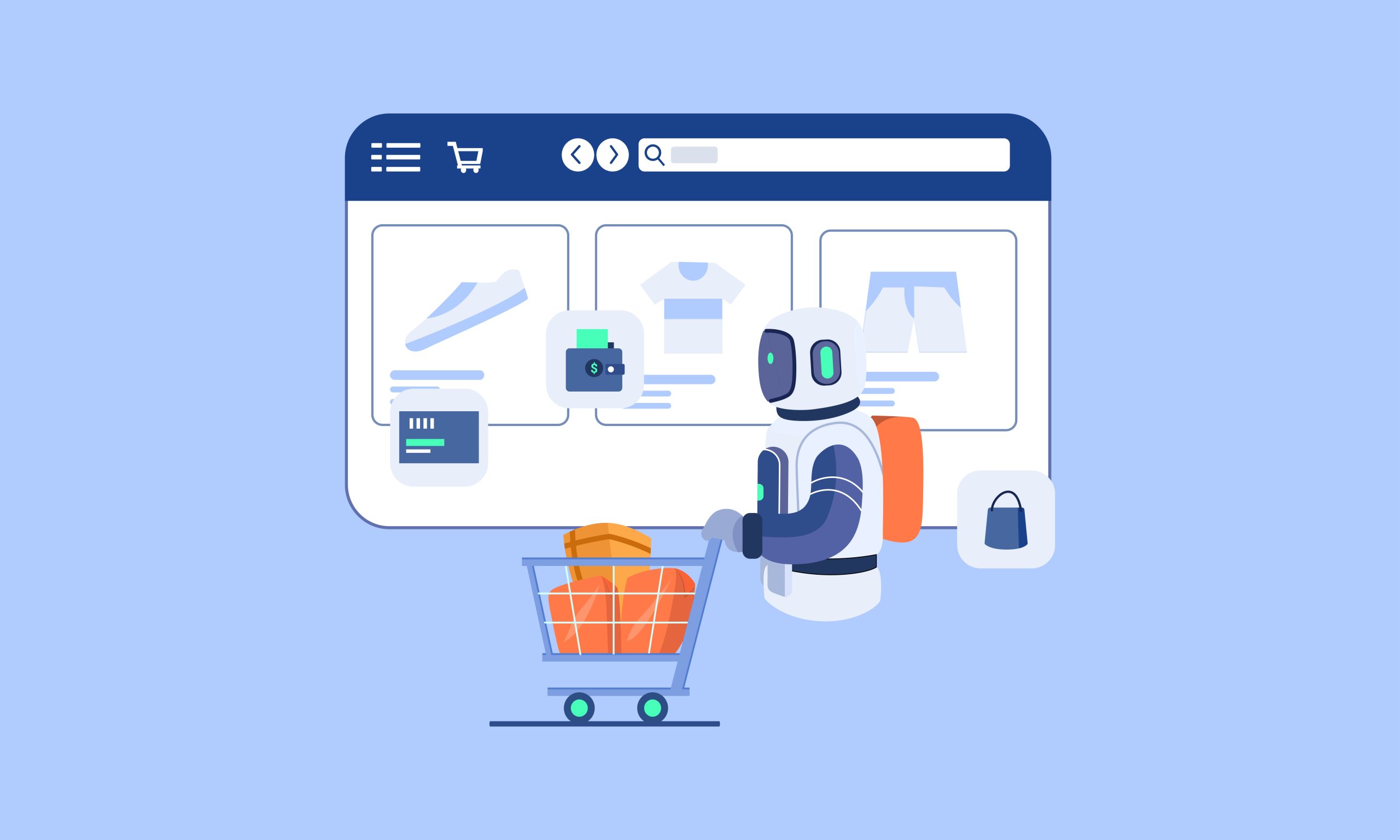
For years, searching in an online store meant, in a way, learning to speak the language of the search engine.
Today, the question is no longer simply “what words did the user type?” but “What does this customer actually need?”
From keyword search to understanding intent
Traditional ecommerce search relies mainly on matching the terms entered by the user with the information available in the catalogue: product names, categories, attributes, descriptions, filters or synonyms.
It is a model that works when the customer knows exactly what they are looking for and, above all, when they use the words the store expects them to use.
The right product may exist, but it simply does not appear.
Every search without relevant results introduces friction at a particularly important moment in the purchase process, when the customer has already shown intent.
This consumer-first approach, which starts with the person’s need and considers the product from there, makes it possible to create more useful digital experiences that are closer to the purchase decision.
With AI Search, this relationship begins to change.
Instead of relying exclusively on keyword matching, search can interpret natural language, context and relationships between different concepts.
The customer no longer needs to understand how the catalogue is organised to find what they need.
The customer can search the way they think
Search aims to identify the products in the catalogue that best meet the need described by the customer.
Exact matching with the searched words therefore stops being the only criterion for reaching the most relevant results.
Search becomes closer to the interaction we would have with a salesperson in a physical store.
This is the interpretive capability that Artificial Intelligence is now beginning to bring to online store search.
How many sales happen after a good search, and how many are lost before it?
When we think about conversion optimisation in ecommerce, we usually analyse product pages, checkout, payment methods, shipping costs, campaigns, performance or the mobile experience.
But there is an earlier question that does not always receive the same attention: how many customers never reached the right product?
A search with zero results or with products that are not very relevant does not necessarily mean that the store does not have what the customer is looking for.
There may simply be a difference between the language used by the consumer and the language used by the catalogue.
This becomes particularly relevant because people who use an ecommerce site’s internal search are often in an active consideration stage.
Comparison content, benefits and product information help clarify the decision and guide the user towards viewing the product, adding it to the cart and completing the purchase.
Improving search helps reduce the distance between customer intent and the product, going beyond simply improving a website feature.
Before asking “which AI are we going to use?”, we need to look at the catalogue
Poor descriptions, inconsistent attributes, confusing taxonomies and poorly structured product relationships continue to produce poor experiences, even when Artificial Intelligence is involved.
In an ecommerce business prepared for AI, product information also plays a role in the experience, in addition to its operational function.
An AI Search implementation should therefore begin with questions such as:
- Are the most important attributes filled in consistently?
- Are the characteristics that influence the purchase decision structured or hidden in descriptions?
- Do similar products use the same terminology?
- Is it possible to relate products to needs, usage situations or customer profiles?
- Is the data centralised or distributed across different systems without a coherent structure?
- Is the available information sufficient for an AI to distinguish between two similar products
In more complex ecommerce operations, this issue becomes even more relevant. Catalogue, ERP, prices, stock, customers and commercial rules may be distributed across several systems that need to communicate with one another.
How can you prepare an ecommerce business for AI Search?
Before choosing a technology, the first step should be to understand the current state of search and data.
- What do customers search for?
- Which searches return zero results?
- Which terms are reformulated?
- Which searches lead to product views?
- Which ones result in conversions?
Are there categories where customers struggle to find the right products?
Analytics data, internal searches, CRM, sales by category and qualitative research help us understand real needs and prevent the experience from being built solely on assumptions.
From there, it is necessary to assess the catalogue, the information architecture and the integrations that support the platform.
Only then does it make sense to decide where and how to introduce Artificial Intelligence.
Adding a search box “with AI” is only one part of the equation.
It means building an experience in which data and technology, supported by intelligence, work together to help the customer find what they are really looking for more quickly.
Where does Toogas come in?
At Toogas, we see the application of Artificial Intelligence in ecommerce as part of a broader ecosystem.
Choosing a model is only one of the factors that contribute to an effective AI Search experience.
It depends on the quality of the catalogue, the platform architecture, the existing integrations, the way customers search and the specific business objectives.
The starting point should therefore be to understand where the opportunities lie.
Toogas can support companies in analysing the existing search experience, identifying friction points, assessing the quality and structure of product data and defining the AI use cases with the greatest potential for the business.
From this foundation, it is possible to design and implement Artificial Intelligence solutions integrated into ecommerce, including smarter search experiences, recommendation mechanisms, personalisation and other ways of making product discovery more relevant.
The application of AI should start from the specific problems the technology can solve, the improvement of the user experience and the impact it can generate for the business.
Is your ecommerce business ready to be searched by people and understood by AI?
At Toogas, we help companies assess where Artificial Intelligence can create real value in ecommerce and turn those opportunities into solutions integrated with the platform, catalogue and existing systems.
Talk to us to understand how to prepare your ecommerce business for a new generation of search, product discovery and AI-supported experiences.